The month of November we celebrate Diabetes Awareness Month and to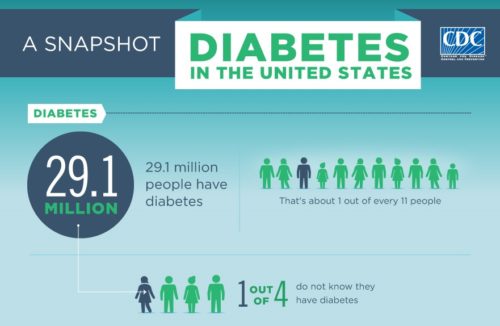 day is World Diabetes Day. These celebrations are held to raise awareness of the disease and to help find a cure. Those are great goals to celebrate. But let’s get personal. What does diabetes mean to you? With more than 29 million Americans, almost 1 in 11, having diabetes, chances are you or someone you know may have diabetes. Or, are you like the 1 out of 4 people with diabetes that are not aware they have it? How has diabetes affected your life? We’d love to hear your stories, both good and bad, about diabetes.
Please share them with us!
It’s Your Life. It’s Your Health. Make That Change!
~John




 Here is an easy egg & potato recipe to start your day. Eggs are an excellent & inexpensive source of high quality protein. Each has about 80 calories & 7 grams of protein. They are a great source of vitamins A & D, iron, the carotenoids, lutein & zeaxanthin (help to reduce risk age-related macular degeneration) & choline (helps improve brain function). The most common question that we get about eggs is, “But, don’t they raise cholesterol?”. To answer that, the most recent research has found that egg consumption is not associated with an increase in cholesterol levels. Actually, a diet lower in saturated fats is a more effective recommendation for the prevention & treatment of high cholesterol. Thus, it is more important to limit the high saturated fats foods that are commonly served with the egg (bacon, sausage) or cooked with the egg (butter) than the actual egg. Prepare your eggs without fat (boiled) or use non-stick spray or olive oil when cooking to help keep saturated fat intake low.



 To maximize your youth athlete’s performance in the classroom AND on the field, it is important to pay attention to the foods we eat. Proper fueling and nutrition can help them feel better, be more alert and learn more. During competition, adequate nutrition can help your child athlete stay injury free or recover quicker if injured. Good nutrition does not have an off-season. To get the most benefit, you need to start now and continue throughout the year. Remember, you set the example for your family!
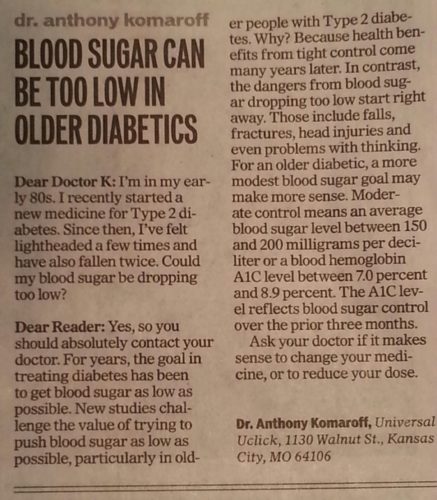 Nice response from Dr. Komaroff in answering a question from one his readers. (Saw this in the Wednesday, August 17, 2016 edition of The Virginian-Pilot). Older people with diabetes definitely need to speak to their physicians about what target blood sugar levels should be. While having chronically high blood sugars is bad over the long term, hypoglycemia, low blood sugar, can cause immediate problems! You must treat low blood sugars with a sense of urgency. Blood sugar monitoring is important. As we age, our ability to feel low blood sugars can diminish. Often, the older patient with diabetes may be taking multiple medications for a variety of health issues. This too can inhibit the body’s response to recognizing low blood sugar levels. Because of these issues, the recommendation is to allow blood sugar levels to run a little higher for this group. Dr. Komaroff details that very well in his column.


